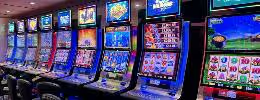

Why Casino Culture Plays a Big Role in Modern Game Design

Casino culture has slipped into modern gaming like it’s wearing stealth gear. One moment, you’re swinging swords or crafting potions, and the next, you’re stuck spinning a wheel, hoping for a rare drop like you just walked into a digital Las Vegas with medieval armor on. And you know what? We’re all in. Because whether you admit it or not, there’s something deliciously thrilling about pressing a button and leaving your fate up to glittery, gameified chance.
The not-so-secret sauce of surprise
The thing is, modern video games love randomness. Developers call it RNG, players call it luck, and your wallet calls it stress. Casino mechanics—slot machines, roulette-style prize wheels, card-based draws—have sneakily become the backbone of everything from AAA loot boxes to gacha mobile games. Even Pokémon, the sweet little RPG we all grew up with, had casinos baked right into towns. Remember those slot machines in Celadon City? Yeah, that was some kid’s first taste of hitting "spin" and praying for three Pikachus.
RPGs, loot, and high-stakes dopamine
Casino culture doesn’t just hang around the mini-games. It’s deep in the DNA of modern game progression. Rare loot drops? Daily spins? Legendary pulls from card packs? You're basically pulling virtual levers in a digital casino that happens to be wearing the outfit of an RPG, shooter, or farming sim. You log in, do your dailies, cross your fingers, and open a chest hoping it’s not another duplicate helmet for a class you don’t even play. That’s not just game design. That’s psychological slot machine engineering.
Games that wear the casino suit proudly
Some games don’t even try to hide it. They're fully embracing the poker chips and neon lights. Online casino simulators are a genre now. You’ve got apps and games that throw you into a virtual casino, hand you a drink (digitally, chill), and let you play poker, blackjack, and slots with real people. Some of them are so slick, they’re basically the Vegas Strip with less secondhand smoke and more Wi-Fi. Even VR’s been invited to the party. You can literally sit at a digital poker table, raise your fake sunglasses, bluff a guy from Brazil, and lose pretend cash in real time. Immersive? Yes. Slightly worrying? Also yes.
Casino vibes where you least expect them
What makes this really fascinating isn’t just the crossover into online gambling spaces—it’s how the feeling of casino play has crept into every genre. Mini-games in story-driven RPGs. Lucky card draws in platformers. Randomized stat boosts like you're gambling on your next sword swing. Even the interface sometimes gives it away. Flashing lights, suspenseful timers, reward jingles that sound suspiciously like you just won a jackpot. You’re not just playing a game—you’re being seduced by it.
Why the blend works so well
At its core, casino mechanics tap into the same psychological itch that makes games fun: reward anticipation. That “just one more spin” energy. And game designers have learned that if you sprinkle that in carefully, players will stay longer, play harder, and, sometimes, spend a little more. But hey, it’s not all predatory. When done right, these mechanics add to the fun. They give a breather between battles. A rush during downtime. A moment of unpredictable joy in a world built on quests and grinding.