
What Makes Casino Games So Easy to Learn?
Casino games are not trying to give players homework. That is their first advantage. Most of them can be explained in one clean sentence. Get closer to 21 than the dealer. Match the symbols. Guess where the ball lands. Roll the dice and hope the table smiles at you for once.
That simplicity matters. A new player does not need a notebook, three tutorial videos, and a cousin who “used to be really good at this.” The basic idea usually clicks fast. You may not understand every side bet, payout, or sneaky little rule yet, but you understand the main action. Casino games know how to open the front door wide. The deeper stuff can wait in the hallway.
The actions feel familiar
A lot of casino games are easy to learn because the actions make sense immediately. Cards are dealt. Dice are rolled. Wheels spin. Symbols line up. Chips are placed. These are simple physical ideas, even when the game is digital. The player can see what is happening without needing a lecture from a man in a waistcoat. That visual clarity is doing half the work. A roulette wheel looks like it wants to spin. A slot button looks like it wants to be pressed. A card game looks like decisions are coming.
Results are obvious
Some games make you wonder whether you did well. Casino games usually do not bother with that mystery. You win or you lose. The card total is clear. The dice result is clear. The symbols matched or they did not. The wheel stopped somewhere, and now everyone must live with it. This makes learning faster because feedback is instant. Players can connect action to outcome quickly. Bet here. Result there. Try again. Adjust slightly. Pretend the last choice was research.
The game teaches through repetition, not long explanations. Even losses explain something. Sometimes they explain nothing except “bad luck exists,” but still, the result is clear.
The choices are small
Casino games often give players just enough choice to feel involved without drowning them. Hit or stand. Red or black. Spin or stop. Bet small or big. Hold this card or swap it. That is manageable. The player is not being asked to control a kingdom, build a spaceship, or remember which potion cures swamp sadness. Small choices lower the pressure. They let people join quickly. Then, once players feel comfortable, they can notice the deeper layers. Strategy. Odds. Timing. Risk. Bankroll limits. All the less flashy stuff that actually matters.
Repetition makes confidence grow
Casino games are built around rounds. Short rounds. Clean rounds. Little loops that reset quickly. That structure helps beginners. One bad hand does not ruin the entire night. One spin ends, another begins. One roll finishes, the dice come back. The rhythm gives players more chances to learn without feeling trapped in a massive campaign. Repetition creates comfort. Comfort creates confidence. Confidence creates the dangerous sentence, “I think I understand this now.”
Easy does not mean shallow
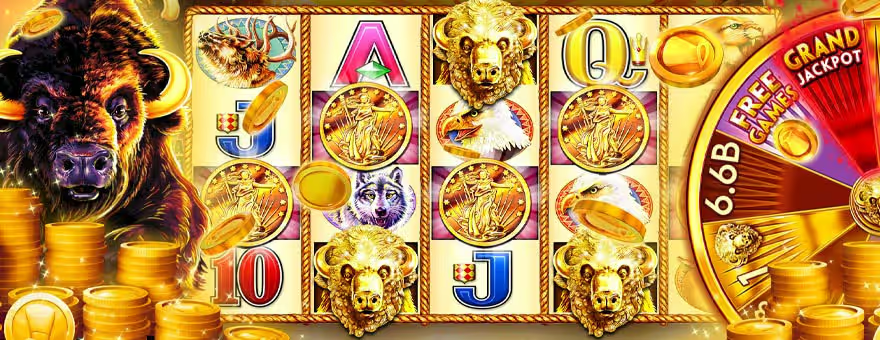
This is the clever part. Casino games are easy to learn, but not always easy to fully understand. Blackjack has simple rules, but strategy can get detailed. Poker is easy to start, then turns into psychology with cards. Roulette looks simple, but the betting layout has layers. Slots are the easiest to play, yet their pacing, themes, and bonus systems can be surprisingly polished. The doorway is simple. The room can be deeper than expected.