
Origin of the Casino
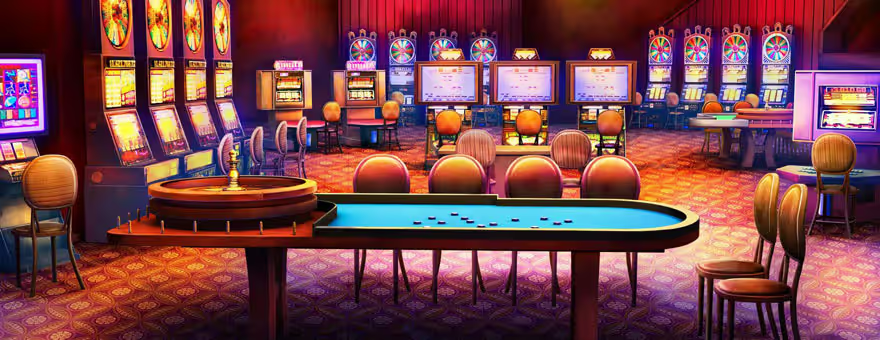
Before the neon lights of Las Vegas and the glitzy online platforms of today, there was a different story—a more ancient, surprisingly philosophical beginning. The word casino might conjure up images of spinning roulette wheels, poker faces, and slot machines yelling out jackpots, but its roots run much deeper. And oddly enough, it didn’t start with gambling. Nope. Casinos were originally all about leisure.
The Italian connection: a place for pleasure
The term “casino” comes from the Italian word casa, meaning house. Add a little suffix -ino and bam—you’ve got “little house.” But not just any little house. In 17th century Italy, these were villas or summerhouses located away from the cities, designed for dancing, music, and social gatherings. Think more fine wine and violins, less blackjack tables. Gambling did sneak its way in, but it wasn’t the sole purpose. These early Italian casinos were posh hangouts with just a pinch of risky business on the side.
Venice takes a gamble: enter the Ridotto
Fast-forward to 1638. Venice was absolutely buzzing with energy, carnivals, and masked mischief. To regulate all this chaos (and maybe make a little money on the side), the government opened the Ridotto. This was arguably the first official gambling house in the world. Located in a wing of the Palazzo Dandolo, the Ridotto was state-sanctioned and open during carnival season. There were strict dress codes and crazy high stakes, so it wasn’t exactly for the common folk. Still, it was a prototype—a prototype of what casinos would eventually become.
Spreading the cards: casinos across Europe
As European society developed, so did its taste for controlled gambling. France jumped in next, heavily influencing the gambling scene with iconic games like roulette and blackjack. Germany, too, chimed in with glamorous resorts like the Kurhaus in Baden-Baden. By the 19th century, “casino” was synonymous with both gaming and general entertainment. You could sip champagne, enjoy an opera, and try your luck—all in one night.
The American revolution: wild west to neon jungles
Across the Atlantic, gambling had its own rough-and-tumble evolution. Early settlers brought over card games and dice, which naturally found their way into saloons and riverboats. These weren’t quite casinos—more like dusty dens of chance—but the spirit was there. The real transformation happened in the early 1900s when Nevada legalized gambling in 1931. Enter Las Vegas. What followed was a gold rush of resorts, entertainment empires, and a casino culture that would set global trends. No more violins. Now it was Elvis, showgirls, and Slots.
Click to play: digital casinos and the online boom
And just when you thought the story ended, along came the internet. The 1990s birthed online casinos—virtual hubs where you could place your bets without even leaving your couch. That accessibility exploded the audience and changed everything. Now, a “casino” could live in your pocket. Fast-forward to today and mobile casino apps, crypto gambling, and live dealer games are redefining the space again. But at its core, the essence remains: a mix of risk, entertainment, and the age-old dream of striking it rich.